 Skip-the-line available
Ninomaru Palace and its nightingale floors
Six connected buildings, thousands of wall paintings and floors that chirp underfoot: what to look for inside Nijo Castle's Ninomaru Palace.
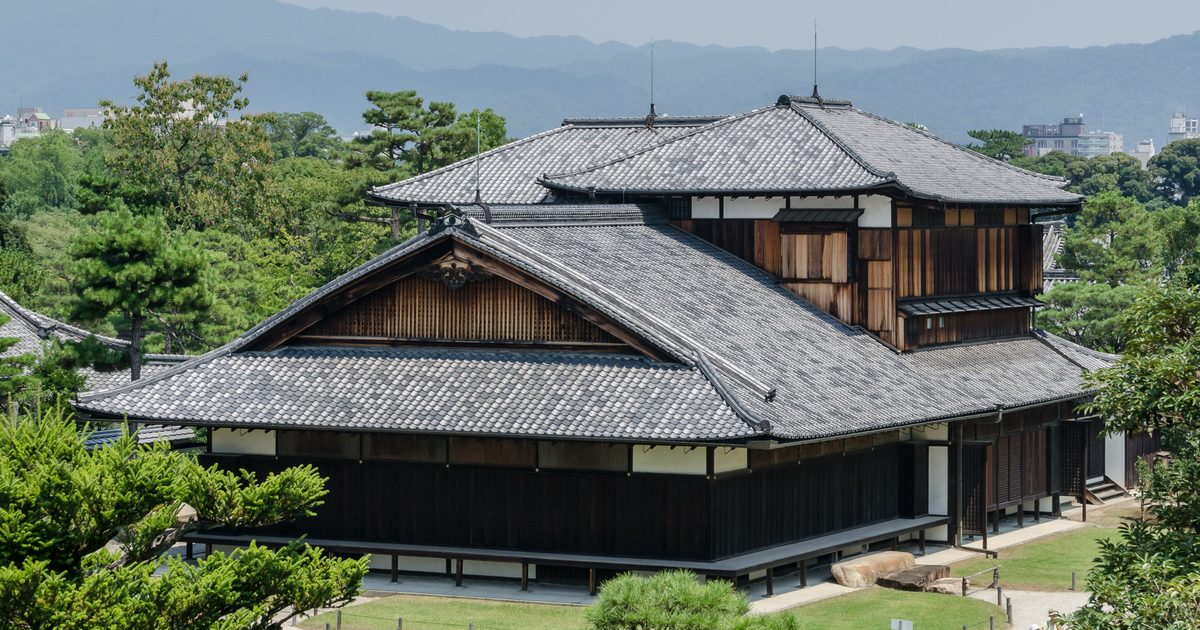
The Ninomaru Palace is the reason most people come to Nijo Castle, and it earns it. Six connected buildings, a National Treasure, hold more than 3,600 wall paintings, many of them from the Kan'ei era by Kano Tan'yu. Underfoot are the nightingale floors, which chirp as you walk and have collected a famous story that the castle itself calls a myth. In one of its halls, the Ohiroma, Tokugawa Yoshinobu gathered his retainers in October 1867, as power was returned to the Emperor. This guide covers what you're looking at as you go through, how the floors really work, the Ninomaru Garden, where to see original paintings up close, and the closing days and rules that catch visitors out. Allow about 30 minutes inside, and more for the garden.
What the Ninomaru Palace is
Nijo Castle was built in 1603 for Tokugawa Ieyasu, with construction ordered in 1601. It was enlarged between 1624 and 1626 for Emperor Go-Mizunoo's visit in 1626. The Ninomaru Palace is the great surviving building of that Tokugawa castle, and it's the palace most people picture when they think of Nijo. Even if you only have an hour at the castle, this is where to spend it.
It's made up of six connected buildings and is designated a National Treasure. Inside are more than 3,600 wall paintings, of which 1,016 are Important Cultural Properties. That's a lot of painting to take in during a half-hour visit, so it helps to know what you're looking at. Count on spending your time looking rather than reading; the paintings carry the visit.
The castle as a whole was granted to Kyoto City in 1939, and in 1994 it became part of the Historic Monuments of Ancient Kyoto World Heritage listing. The grounds cover 275,000 square metres inside a perimeter of about 2 kilometres, so the Ninomaru is only one part of a big site, but it's the part you shouldn't miss. Plan your day so it gets your fresh legs.
The Kara-mon gate
Before you reach the palace, stop at the Kara-mon. It's an Important Cultural Property, roofed in cypress bark and covered in carvings: cranes, pine, bamboo, plum and guardian lions. Most people hurry through it, which is a shame, because the detail rewards a few minutes of looking. Look for the guardian lions first; they're the easiest to pick out. Take your time.
Stand back first to take in the whole gate, then walk up close and pick out each motif in turn. Pine, bamboo and plum are a classic trio in Japanese decoration, and picking them out here, alongside the cranes and lions, is a good way to warm up your eye before the paintings inside. Slow down here and the palace will make more sense.
The space between the Kara-mon and the Ninomaru is the castle's spot for group photos, so expect people lining up shots here. Since photos aren't allowed inside the palace, this is your last chance for pictures until you come back out into the garden. Get your group shots done here, then put the camera away for the next half hour. Outdoor photos are fine everywhere else.
Kano Tan'yu and the wall paintings
Many of the palace's murals are Kan'ei-era works by Kano Tan'yu. Painted across the walls and doors, they turn each room into a continuous scene, so it pays to take in a whole room rather than fixing on one panel. Stand in the middle of a room for a moment before you look at the details, and let the whole scheme register first. It's an easy way to appreciate the paintings as one space around you.
With more than 3,600 paintings across six buildings, you can't study them all in half an hour, and you shouldn't try. Pick a few rooms to slow down in. Look at how the scale of the subjects changes from room to room, and how the paintings work with the light coming in from the corridors. Three or four rooms seen properly beat thirty glimpsed.
If you want a closer look at originals in good light, the castle's Painting Gallery shows original Ninomaru paintings in exhibitions that change four times a year. It needs a separate ticket, which our fares don't include, but it's worth knowing about if the murals are what drew you to Nijo. It's open about 240 days a year, so check before planning around it.
Walking through the six buildings
The visit takes about 30 minutes. Because the six buildings are connected, you move from one to the next without going back outside, and the rooms unfold as you go. Corridors can be busy, especially in the middle of the day, so walk at a comfortable pace and step aside when you want to stop. There's no prize for finishing first.
Look up as well as across. Paintings run high on the walls, and the scale of the rooms is part of the point. Then listen to the floor under your feet, because this is where the nightingale floors come in, chirping with every step. There's more on how they work below, so you'll know what you're hearing when it starts.
If you're also seeing the Honmaru Palace, notice the contrast. The Ninomaru belongs to the Tokugawa story of the castle, while the Honmaru was the home of an imperial princely house, moved here in the 1890s. Seeing both on the same day shows you two very different sides of Nijo. If you only have time for one, the Ninomaru is the classic choice, but the pair together is better.
The Ohiroma and October 1867
The Ohiroma is the hall where, in October 1867, Tokugawa Yoshinobu gathered his retainers. That gathering is tied to the return of power to the Emperor. For a castle that was built for Tokugawa Ieyasu, it's a striking place for that moment in the Tokugawa story to play out. Of all the rooms, this is the one to slow down in.
Standing in the Ohiroma, it's worth picturing the scene: a castle built for Tokugawa Ieyasu more than 260 years earlier, hosting the last act of Tokugawa rule. It's one of those rooms where knowing the history changes what you see, so read this paragraph before you go, not after. A little imagination goes a long way here. Give it a minute before moving on.
The Ohiroma also matters for the garden. The Ninomaru Garden lies to the west of the Ohiroma, so once you leave the palace, the garden picks up where the hall leaves off. Keep that in mind when you plan your route out. Leave the palace with energy to spare, as the garden deserves a proper walk round rather than a glance.
Nightingale floors: how they really work
Walk along the corridors and the floor chirps, a soft squeaking that gave the boards their name. Every step sets it off, and in a crowded corridor the sound becomes a constant background chatter that you'll remember long after you've forgotten room names. It's hard to miss, and hard not to smile at. Listen for it from your very first steps along the corridors.
The sound comes from clamps under the floorboards rubbing against nails as the boards move under your weight. It's a mechanical by-product of how the floor is fixed, not a hidden instrument. Once you know that, listen to how it changes with your pace and where you put your feet. Clamps and nails, nothing more mysterious than that. It's a nice reminder that old buildings make sounds for practical reasons.
You'll often hear that the floors were designed as an intruder alarm, so no assassin could creep up unheard. It's a good story, but the castle itself describes it as a myth. Enjoy the sound for what it is, and feel free to pass the correction on to whoever tells you the alarm version in the queue. The truth is a little more ordinary.
The Ninomaru Garden
The Ninomaru Garden is a pond garden to the west of the Ohiroma, designated a Special Place of Scenic Beauty. Kobori Enshu was among the officials involved in its making. It's a very different space from the open lawns of the Honmaru Garden, built around water and stone. Come out of the palace and give yourself time to walk it. It's at its best seen slowly.
Seeing the palace and garden together takes about one to one and a half hours, according to the castle. Don't rush out of the palace and straight past the pond. Walking round it gives you views back towards the buildings you've just been through, and outdoor photos are allowed. If you're short of time, a single lap is better than none.
If you have time to spare after the garden, the castle also has Seiryu-en, laid out in 1965 with a Japanese half and a Western half, and the stone base of the old keep, which looks over the Honmaru Palace and garden. Both make good additions to a longer visit. Seiryu-en in particular makes a calm change of pace after the palace interiors.
Closing days, timing and house rules
The Ninomaru Palace closes every Tuesday in January, July, August and December, plus 26 to 28 December and 1 to 3 January. If one of those Tuesdays is a public holiday, it opens that day and closes the next. The whole castle closes from 29 to 31 December. Check your date before you book. A palace that's closed on your one Kyoto day is a disappointment you can avoid with a two-minute check.
Last reception for the Ninomaru is 16:10. The castle lets visitors in until 16:00 and closes at 17:00. If you're also visiting the Honmaru Palace on a timed ticket, put the Ninomaru first when your Honmaru time is late in the afternoon, or you risk missing it. Morning visits give you the most breathing room for both palaces, so choose an early start if you can.
No photos or video inside the palace. Outdoor photos are fine, but tripods, monopods and drones aren't allowed anywhere in the castle. Food is only allowed in the main rest area, and there's no re-entry once you leave, so plan to see everything in one visit. Eat before you go in, bring water for the walk and keep your camera for the gardens.
Frequently asked
Why are they called nightingale floors?
Because they chirp as you walk. The sound comes from clamps under the boards rubbing against nails as the floor moves under your weight.
Were the nightingale floors built as an intruder alarm?
The castle says that story is a myth. The chirping is a by-product of how the floor is fixed, with clamps rubbing against nails, rather than a deliberate alarm.
How long does the Ninomaru Palace take?
About 30 minutes inside. With the Ninomaru Garden, allow one to one and a half hours. Adding the Honmaru Palace and its garden brings a full visit to about two and a half to three hours.
Can I take photos inside the Ninomaru Palace?
No. Photos and video aren't allowed inside. Outdoor photos are fine, and the area between the Kara-mon and the Ninomaru is the castle's group photo spot.
When is the Ninomaru Palace closed?
Every Tuesday in January, July, August and December, plus 26 to 28 December and 1 to 3 January. If a Tuesday is a public holiday it opens that day and closes the next.
Is the Ninomaru Palace included in your fares?
Yes. Each fare includes castle admission with the Ninomaru Palace, plus a timed Honmaru Palace ticket, for one visitor. The Painting Gallery is a separate ticket and isn't included.
Who painted the Ninomaru Palace wall paintings?
Many of the murals are Kan'ei-era works by Kano Tan'yu. The palace holds more than 3,600 wall paintings, 1,016 of them designated Important Cultural Properties.